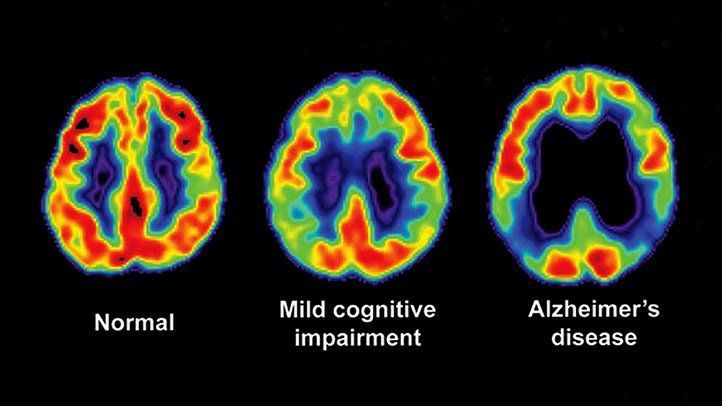
Source: Everyday Health
Soon after Erma Jean’s first appointment, the symptoms that seemed so minute at first became more prevalent. Forgetfulness became a norm. Slurred and confused speech grew into silence. The symptoms of Alzheimer’s were discerning, her treasured and practiced recipes even fading from her memory. During the day, she sat on her couch alone for hours. During the night, horrifying hallucinations muddled her grasp on reality. Her children attempted to care for her, but as she slowly lost strength and control of bodily functions, they realized that they couldn’t do it alone. They began to pay out of their pocket for a nurse, because assistance from Medicare was minimal. A year later, one nurse was not enough to care for Erma Jean. Inadequate in-home care beckoned the transition to a nursing facility, a costly substitute both emotionally and financially. While Erma Jean’s family coped with her declining state, her house was being repossessed to cover the expenses associated with her care.
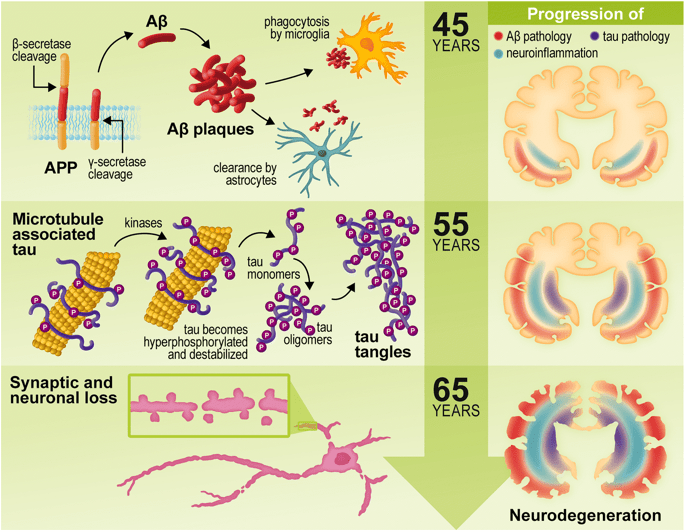
Erma Jean’s genetic makeup had sealed her fate, but it was not until she was older that those genes began to cause rapid changes in her brain chemistry. Her brain cells began producing misfolded proteins. Once the process was initiated, the misfolded proteins developed rapidly and in bulk. They tangled and combined, otherwise considered the development of neurofibrillary tangles and amyloid plaques — as mentioned in the previous blog post. Figure 3 displays how these two causes of Alzheimer’s Disease can lead to brain decay. However, the human body is not passive; it employs an innate immune response (Heneka et al. 2015). Both the disease and the body’s defense mechanism were written into Erma Jean’s genome from its conception.
Source: Journal of Neuroinflammation
As shown in Figure 4, the immune system responds by sending phagocytes – cells that envelope infected cells – and, consequently, causes swelling in the brain. Unfortunately, researchers have found that the swelling only contributes to the progression of Alzheimer’s by destroying healthy brain cells and that the immune system’s response is ineffective (Heneka et al. 2015). Erma Jean’s initial symptoms were just the beginning of the disease that eventually would cause brain death and claim her life. Her rapid progression was not out of character for those diagnosed with the disease. Alzheimer’s had taken a tangible toll on her mental capacity, as her body’s immune system was rendered helpless to respond.
 Erma Jean's Life With Alzheimer's Disease