Introduction

Abstract:

The following scientific blog is a reflection on Erma Jean’s progression with Alzheimer’s Disease and how the science behind Alzheimer’s is displayed through her specific case. Erma Jean has been diagnosed with Alzheimer’s Disease for over seven years now. Being from rural western North Carolina, Erma Jean’s resources were limited as she learned of her diagnosis. Using her story as a framework, this blog will explore Alzheimer’s research involving causes, genetics, diagnosis, symptoms and public health prevention. 

The Obscurity of Alzheimer’s Disease

Figure 1: a portrait of Erma Jean approximately 1 year before Alzheimer’s Disease diagnosis
Source: family of Erma Jean

Figure 1 is a photo taken in 2012 – approximately one year before Erma Jean would learn about her diagnosis of Alzheimer’s Disease. Earlier that day, Erma Jean had been teaching her granddaughter her favorite biscuit recipe that she had committed to memory. Erma Jean is the oldest of her six siblings and grew up in an impoverished household. Being raised in the rural Blue Ridge Mountains of North Carolina, Erma Jean learned at a young age that resources, such as education and medical care, are limited and should not be taken for granted. Erma Jean married at a young age and had two children. When her husband passed at 41, Erma made family a priority — providing for her children as a single mother. As Erma Jean aged, she began to forget the location of everyday items, such as jewelry and keys. Medical care was not easy to obtain due to affordability and regional availability, so Erma Jean assumed her forgetfulness stemmed from age. Once the doctor appointment finally came, her diagnosis was realized with a rapid decline of limited cognitive function.  

Figure 2: a drawing of the development of amyloid plaques and neurofibrillary tangles in neurons
Source: ResearchGate

Erma Jean had a limited understanding of her diagnosis, and she wasn’t alone. Even today, researchers are striving to understand the genetic component of Alzheimer’s Disease. Multiple researchers from the Alzheimer’s Disease Genetics Consortium (2016) recognized how little information about the genetic variance of the disease was available. In response, the research team hosted observational studies and found that the genetic component of Alzheimer’s was influential in the development of the disease and that it can be detected prior to the presentation of symptoms or mental decline. The genes that determine the probability and impact of late-onset Alzheimer’s Disease would begin to accumulate as the diagnosed aged.

Erma Jean was unaware of the genes that were causing her brain cells to produce misfolded proteins. As shown in Figure 2, some misfolded proteins would become neurofibrillary tangles and others would form amyloid plaques – otherwise known as the two main causes of Alzheimer’s Disease (Heneka et al. 2015). Erma did not have the privilege knowing what was happening in her own mind as she busily cared for children and strived to overcome the limitations of poverty.

Alzheimer’s Disease in Action

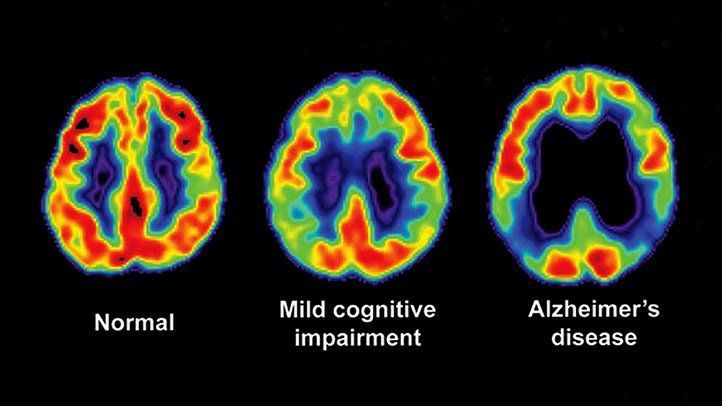
Figure 3: brain scans displaying how Alzheimer’s Disease can lead to significant brain decay
Source: Everyday Health

Soon after Erma Jean’s first appointment, the symptoms that seemed so minute at first became more prevalent. Forgetfulness became a norm. Slurred and confused speech grew into silence. The symptoms of Alzheimer’s were discerning, her treasured and practiced recipes even fading from her memory. During the day, she sat on her couch alone for hours. During the night, horrifying hallucinations muddled her grasp on reality. Her children attempted to care for her, but as she slowly lost strength and control of bodily functions, they realized that they couldn’t do it alone. They began to pay out of their pocket for a nurse, because assistance from Medicare was minimal. A year later, one nurse was not enough to care for Erma Jean. Inadequate in-home care beckoned the transition to a nursing facility, a costly substitute both emotionally and financially. While Erma Jean’s family coped with her declining state, her house was being repossessed to cover the expenses associated with her care.

Erma Jean’s genetic makeup had sealed her fate, but it was not until she was older that those genes began to cause rapid changes in her brain chemistry. Her brain cells began producing misfolded proteins. Once the process was initiated, the misfolded proteins developed rapidly and in bulk. They tangled and combined, otherwise considered the development of neurofibrillary tangles and amyloid plaques — as mentioned in the previous blog post. Figure 3 displays how these two causes of Alzheimer’s Disease can lead to brain decay. However, the human body is not passive; it employs an innate immune response (Heneka et al. 2015). Both the disease and the body’s defense mechanism were written into Erma Jean’s genome from its conception.

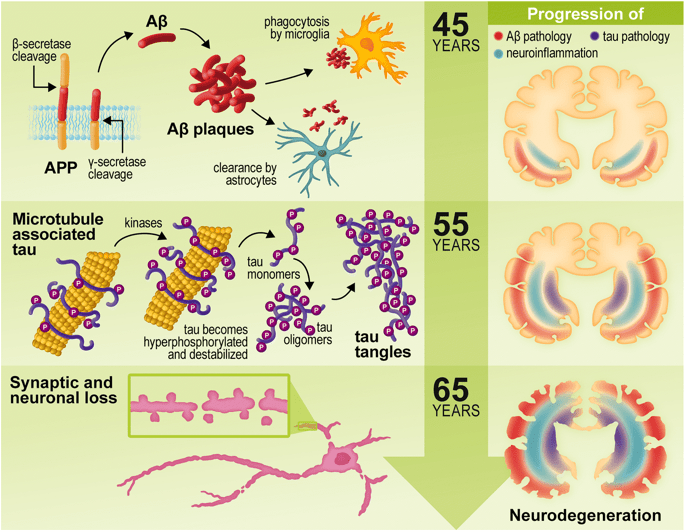
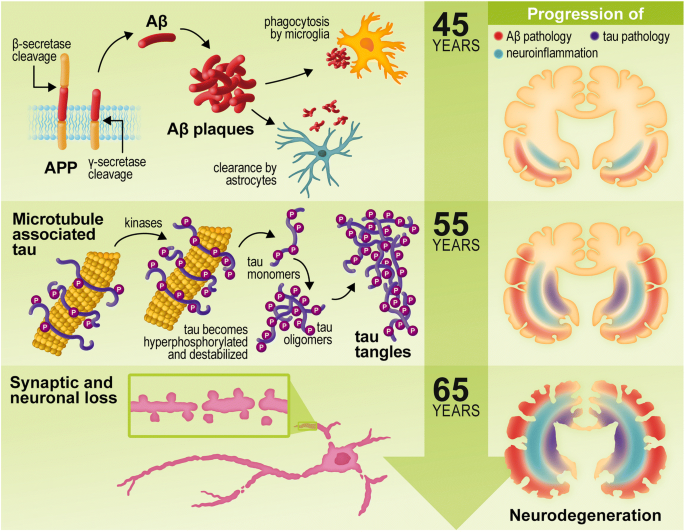
Figure 4: an infographic explaining the progression of Alzheimer’s Disease by neuroinflammation
Source: Journal of Neuroinflammation

As shown in Figure 4, the immune system responds by sending phagocytes – cells that envelope infected cells – and, consequently, causes swelling in the brain. Unfortunately, researchers have found that the swelling only contributes to the progression of Alzheimer’s by destroying healthy brain cells and that the immune system’s response is ineffective (Heneka et al. 2015). Erma Jean’s initial symptoms were just the beginning of the disease that eventually would cause brain death and claim her life. Her rapid progression was not out of character for those diagnosed with the disease. Alzheimer’s had taken a tangible toll on her mental capacity, as her body’s immune system was rendered helpless to respond.

Public Health and Alzheimer’s Disease

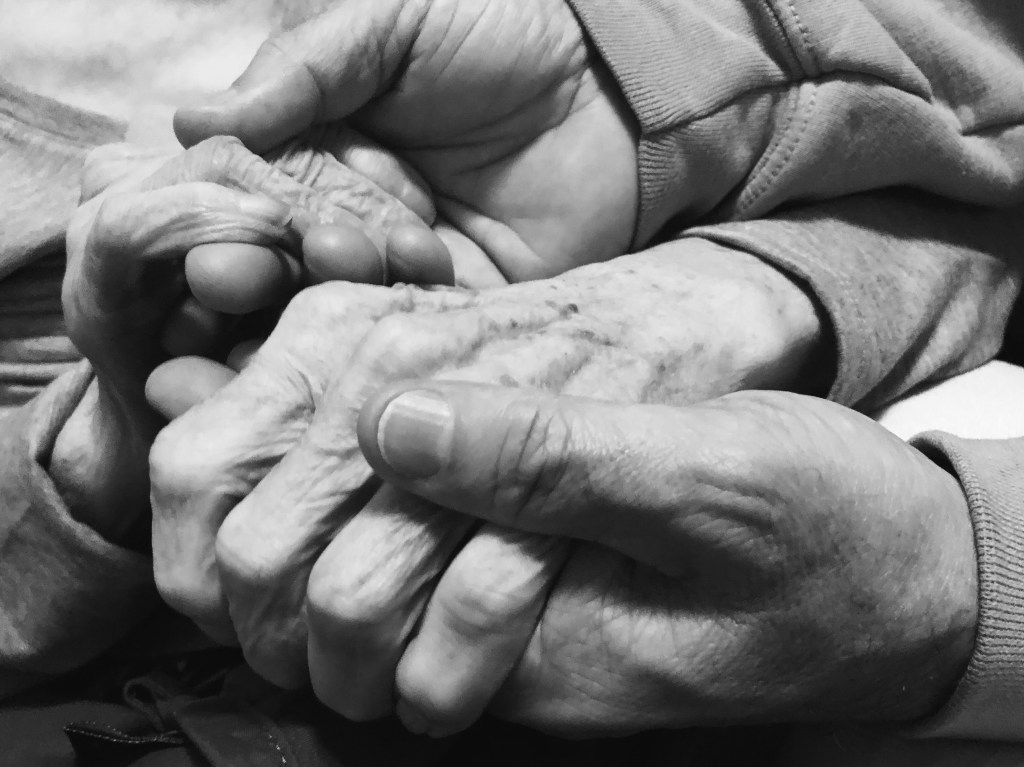
Figure 5: a image of Erma Jean five years after being diagnosed holding hands with her son
Source: family of Erma Jean

Erma Jean had heard about Alzheimer’s Disease. She had seen stories about it on television. When the doctor told her the diagnosis, she was not at a loss of words. She was angry, afraid and disappointed. Erma Jean quit school in sixth grade. She made her own way in the world with physical labor, eventually dreaming up her own small business. Erma Jean raised children and taught them the value of grit in a harsh world. She fought off the realities of poverty. However, Erma Jean could only battle the enemies she knew. Prior to her diagnosis, no one offered any resources for detection and diagnosis of Alzheimer’s Disease. To her dismay, even the medical community could only offer minimal support at great cost. Public health failed Erma Jean by neglecting to inform her about Alzheimer’s Disease or offer the support she needed through her diagnosis. By the time Erma Jean had realized the fate which had befallen her, it was too late. Figure 5 is a recent image of Erma Jean and her son holding hands —doctors are uncertain if she remembers who her son is.

Alzheimer’s Disease is the sixth leading cause of death in North Carolina (UNC 2011), and susceptibility to it can be accurately detected (ADGC 2016). Alzheimer’s clinical trials exist and are often successful in mitigating the symptoms of the diseases (Insel et al. 2017). Erma Jean did not have the luxury of being informed when it came to these three simple, but life-giving, facts. Many public health institutions, including the Gillings School of Global Public Health at the University of North Carolina, have done extensive research on the effect Alzheimer’s Disease is having on North Carolinians. The elder population (65 years or older) is the largest age group in North Carolina. As of 2016, 160,000 people were diagnosed with Alzheimer’s in North Carolina and the number of diagnoses is expected to increase by 31% by 2025 (NC State Aging Profile 2016). Alzheimer’s Disease has a formidable, consequential presence in North Carolina; nonetheless, much of the population, is still lacking in knowledge of basic care. The Center of Disease Control and Prevention (CDC) and Alzheimer’s Association (2013) found that less than 50% of Alzheimer’s and dementia-related patients felt adequately informed in their diagnosis. Only 47% of physicians felt prepared to offer adequate support to those they diagnose with Alzheimer’s Disease (Osborn et al. 2015).

Figure 6: an image revealing the rural nature of Erma Jean’s home; this photo was taken a few miles away from her residence
Source: CNY Hiking

Erma Jean is one example of thousands in North Carolina alone. Alzheimer’s Disease is on the rise and is only starting to be effectively addressed by government and research institutions. Erma Jean could not have changed her diagnosis of Alzheimer’s, but she deserved to have previous knowledge of the disease that would seal her fate while she still had the ability to understand. Figure 6 is a photo taken only a few miles away from Erma Jean’s residence. The location of her residence should not have greatly affected her ability to get help. Public health solutions are needed in North Carolina to prevent lives affected by Alzheimer’s Disease from being ignored.

References

Alzheimer’s Association and the Centers for Disease Control and Prevention. Alzheimer’s Association. The Healthy Brain Initiative: The Public Health Road Map for State and National Partnerships, 2013–2018. Chicago, IL: Alzheimer’s Association; 2013. http://www.alz.org/publichealth/downloads/2013-RoadMap.pdf. Accessed February 14, 2020.

Alzheimer’s disease research – awareness, education and care (Spring, 2011) • UNC Gillings School of Global Public Health. UNC Gillings School of Global Public Health. 2011 [accessed 2020 Feb 18]. https://sph.unc.edu/cphm/were-racing-ahead-spring-2011/alzheimers-disease-research-awareness-education-and-care-spring-2011/

Heneka MT, Carson MJ, Khoury JE, Landreth GE, Brosseron F, Feinstein DL, Jacobs AH, Wyss-Coray T, Vitorica J, Ransohoff RM, et al. Neuroinflammation in Alzheimer’s disease. The Lancet Neurology. 2015 Mar 16 [accessed 2020 Jan 15]. https://www.sciencedirect.com/science/article/pii/S1474442215700165

Insel PS, Hansson O, Mackin RS, Weiner M, Mattsson N. Amyloid pathology in the progression to mild cognitive impairment. Neurobiology of Aging. 2017 Dec 27 [accessed 2020 Jan 22]. https://www.sciencedirect.com/science/article/pii/S019745801730413X

NC State Aging Profile. North Carolina is Aging. North Carolina State Government. 2017 December 1 [accessed 2020 Feb 1]. https://files.nc.gov/ncdhhs/documents/files/NC%20State%20Aging%20Profile%202016.pdf

Osborn R, Moulds D, Schneider EC, Doty MM, Squires D, Sarnak DO. Primary Care Physicians In Ten Countries Report Challenges Caring For Patients With Complex Health Needs. Health affairs (Project Hope). 2015 Dec [accessed 2020 Feb 21]. https://www.ncbi.nlm.nih.gov/pubmed/26643631

Ridge PG, Hoyt KB, Boehme K, Mukherjee S, Crane PK, Haines JL, Mayeux R, Farrer LA, Pericak-Vance MA, Schellenberg GD, et al. Assessment of the genetic variance of late-onset Alzheimer’s disease. Neurobiology of Aging. 2016 Mar 3 [accessed 2020 Jan 15]. https://www.sciencedirect.com/science/article/pii/S0197458016001834

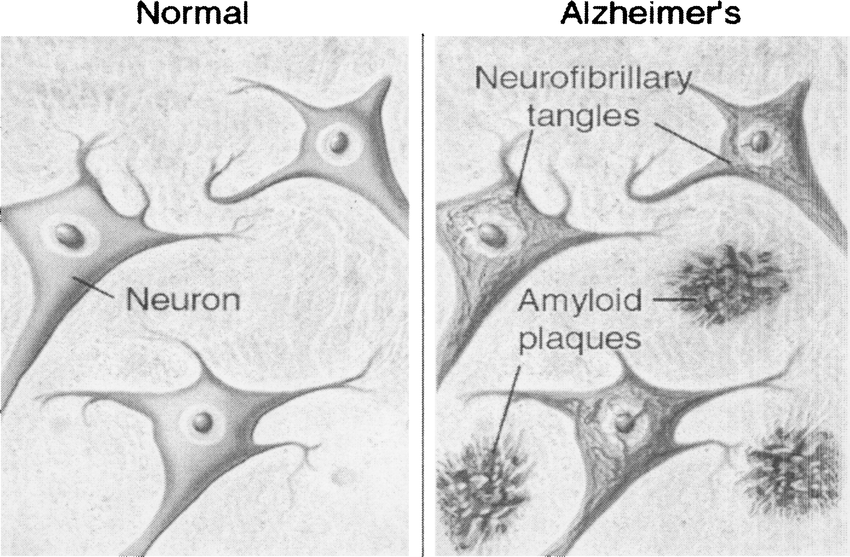
Image Sources

Home Page Cover Photo: https://www.cnyhiking.com/BRP-MountMitchellStatePark.htm

Figure 1: family of Erma Jean

Figure 2: https://www.researchgate.net/profile/Ezra_Holston/publication/7484426/figure/fig1/AS:366103298625536@1464297236245/Neurofibrillary-tangles-and-amyloid-plaques-in-Alzheimers-Disease-Taken-from-American.png

Figure 3: https://images.everydayhealth.com/images/senior-health/alzheimers-disease/amyloid-pet-imaging-for-alzheimers-diagnosis-722×406.jpg?w=1110

Figure 4: https://media.springernature.com/lw685/springer-static/image/art%3A10.1186%2Fs12974-018-1313-3/MediaObjects/12974_2018_1313_Fig1_HTML.png

Figure 5: family of Erma Jean

Figure 6: https://www.cnyhiking.com/BRP-MountMitchellStatePark.htm

Design a site like this with WordPress.com
Get started